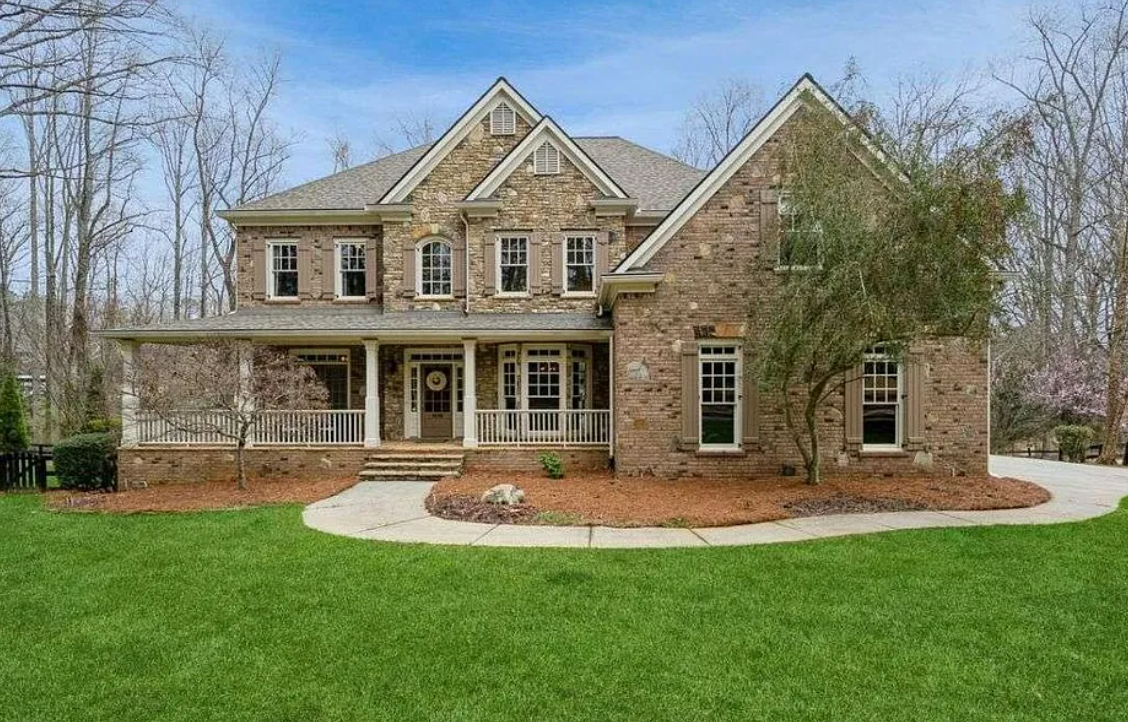
Two Fulton County Communities Worth Comparing
Both sit in North Fulton County, both serve well-regarded school districts, and both attract buyers from across Metro Atlanta. The differences between them are real and worth understanding before you search.

Alpharetta and Milton share a border, share GA-400 as their commuter spine, and share Fulton County school zones. On paper, they look nearly identical. In practice, they attract different buyers for reasons that become obvious once you spend time in both.
Alpharetta has spent the last decade building density. Its downtown has become a genuine destination, Avalon added a mixed-use anchor on the north end, and the Alpha Loop trail gives residents a walkable connection that most suburbs cannot offer. The city hosts several hundred technology companies and regional offices, which means a meaningful number of residents also work locally rather than commuting into Atlanta.
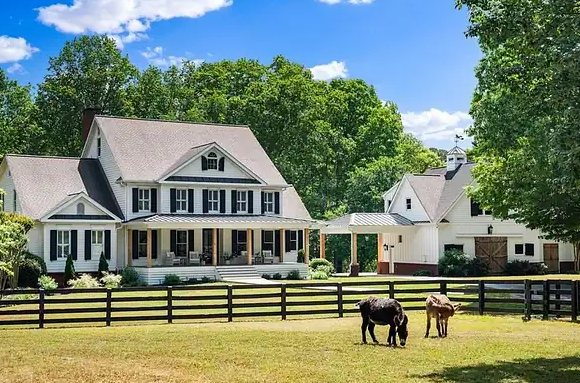
Milton chose a different path. Incorporated in 2006 with a specific mandate to limit high-density development, it has preserved the equestrian farms, large lots, and wooded landscapes that defined this part of Fulton County for decades. There is no downtown Milton in the same sense. There are a handful of neighborhood commercial nodes, a farmer's market, and a community character that prioritizes acreage and quiet over walkability and activity.
Neither is better. They serve different households. The question is which one serves yours.
If your household values being able to walk to dinner, a trail run, or a weekend market, Alpharetta is the stronger fit. Downtown Alpharetta has matured into a genuine small-city center with independently owned restaurants, a greenway trail system, live music programming, and a density of activity that gives it an energy unusual for a suburban Georgia city.
The Alpha Loop trail alone changes daily life in Alpharetta. It is a paved multi-use trail that connects the downtown core with surrounding neighborhoods, Avalon, and the Big Creek Greenway. Residents use it for morning runs, bike commutes to local offices, and weekend errands. It is the kind of infrastructure that does not appear in a listing description but shapes how much you actually enjoy where you live.
Milton's daily life is quieter by design. Residents here tend to have more land, more privacy, and fewer immediate neighbors. Morning walks happen on private driveways and gravel roads rather than shared urban trails. Horses are a common sight. The lifestyle appeals to buyers who find density uncomfortable and would rather drive a few minutes to reach anything commercial in exchange for space and stillness at home.
Equestrian properties are specifically a Milton asset. If your household includes riders or you have any interest in horses, Milton has the boarding facilities, the trail systems, and the zoning to support that. Alpharetta has almost none of that infrastructure.

Alpharetta's price range runs roughly from the low $400,000s for smaller townhomes near the city's southern edge to well over $2 million for newer custom homes in the Cambridge or Milton High school zones. The most active segment is $600,000 to $1.1 million, where buyers get detached single-family homes in established neighborhoods with relatively quick access to downtown and GA-400.
Milton's price floor is higher. Entry-level detached homes in Milton typically start near $600,000, and the median sale price runs well above Alpharetta's in most reporting periods. Where the value proposition changes is in what that money buys. A $900,000 budget in Milton often returns an acre or more of land, a longer driveway, and a sense of seclusion that the same budget rarely finds in Alpharetta's more densely subdivided neighborhoods.
At the upper end, Milton's custom estate market runs from $1.5 million into the multi-millions for properties with equestrian facilities, guest houses, and acreage that would be impossible to assemble in Alpharetta's more built-out landscape. If land is a priority, Milton's price premium reflects genuine land value rather than just location.
Buyers comparing the two often land on Alpharetta when lifestyle convenience is the priority and Milton when acreage and privacy are non-negotiable.

Both Alpharetta and Milton are served by Fulton County Schools. The high school zones are a significant factor in both markets. Milton High School and Cambridge High School serve most of Milton and the northern portions of Alpharetta. Alpharetta High School serves the southern and central parts of the city.
School zone boundaries do not follow city limits. Some Alpharetta addresses fall in the Milton High zone, and some Milton addresses fall in the Alpharetta High zone. If a specific school assignment matters to your household, it is worth verifying the zone for any address you are considering before you make an offer. Zone maps are available through Fulton County Schools, and your agent should be able to confirm the assignment for any property.
All three high schools draw families specifically because of their academic programming. The elementary and middle school feeders vary by zone and are worth researching for your specific target neighborhoods.

Both cities connect to GA-400, and both offer roughly similar drive times to Buckhead and Midtown on a normal morning. From central Alpharetta, the drive to Buckhead runs about 25 to 35 minutes depending on exits and traffic patterns. From central Milton, add five to ten minutes depending on which part of Milton you are leaving from.
The practical difference is that Alpharetta sits closer to GA-400 exits at Highway 9 and Old Milton Parkway, while Milton's northern areas require a longer approach to the highway. For commuters making the Atlanta run daily, the cumulative time difference across a work week is real, though not dramatic.
Many Alpharetta residents work within the city's technology corridor and do not commute to Atlanta regularly. That option is less available in Milton, which has far less commercial employment within the city itself.

Buyers who choose Alpharetta tend to want walkability, proximity to dining and activity, an easier commute to Atlanta, and a neighborhood feel that is active rather than quiet. They are comfortable in a more suburban density and often value the Alpha Loop and Avalon as regular parts of their routine.
Buyers who choose Milton tend to prioritize land, privacy, and the ability to have animals on the property. They are comfortable driving to restaurants rather than walking, and they place a higher value on the acreage and character of the property itself than on proximity to commercial activity.
Families with young children often sort by school zone first, then by housing budget, then by lifestyle. That ordering tends to make Alpharetta and Milton relatively interchangeable for school-focused buyers, with price and property type becoming the deciding factors.
If you are weighing both cities and want to talk through what the current inventory looks like in each, reach out to Billy. He has sold homes across both markets and can help you understand what your budget realistically returns in each area right now.
Billy knows both markets in detail. Let him help you figure out which one fits your household.
📞 404-372-8883 · Responds within 2 hours